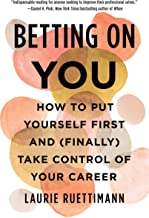
Betting on Ourselves

Read the book above. You can check it out of the library should you not be able to buy it.

I recommend the book because long before I read it last week I’d been doing the things the author told readers to do.

One controversial thing that Ruettimann tells workers to do is to be Slackers on the job. How so? Not to break your back at work where you’ll wind up stressed.

Does any of us really want to be popping pills and slurping Frappuccinos to get by every day?

This is where it pays to research yourself and explore careers that are in sync with your personality.

My goal is to publish the book Working Assets: A Career Guide for Peers this summer 2021. It has competitive information for finding and succeeding at a job when you live in recovery.

The trick to being happy and healthy is to have a balanced life. I call this living “a full and robust life.” In your after-hours and on the weekend that’s when it’s imperative that you do what you love.

If you ask me no one should be doing more than a half hour of overtime every day at our jobs. Finding the job that doesn’t require overtime is the golden key to unlocking the ideal balance.

Most workers in corporate offices won’t get more than a 3 percent raise every year. Or 2 percent like milk. While the CEOs earn millions.

How to fight this injustice? Show up to your job on your own terms. Live that full and robust life outside of your day job.

Read Betting on You to find out how you can win the battle of the bulge–of your overstuffed briefcase and ballooning midsection.

There’s a better way than passively accepting the status quo on a job.

Long before I read this Laurie Ruettimann book I too had become a Slacker to preserve my sanity.

In the coming blog entry I’ll talk about my own strategies for achieving peace and harmony.

WFH Revisited

Setting up office space in your home is one thing. Showing up to your desk or dining table is another.

As hard as it can be I think you should make the effort to dress up. Wearing pajamas all day can put you in a depressed mood.

The question is: What comes first? Do you remain in your night clothes because you’re depressed? Or does wearing p.j.s flatten your mood?

Either way acting kinder to yourself is the way to go. Set 9:00 a.m. as the cut-off time. By this time in the morning try to be dressed in day clothes. Go easy on yourself on the days it takes you longer to get going.

I recommend writing entries in a grateful journal to record things you’re grateful for. Alternate these entries with writing 5 things that make you happy. A study reveals that keeping this kind of journal can boost a person’s mood.

OK–so you might not want to wear a suit to your home “office.” That’s OK. I recommend splurging on the Dressing Well Virtual Styling service. It costs you, yet the consultant can send you links to clothing items you can buy online for this “new normal” WFH scenario.

In the coming blog entry I’m going to talk about a cutting-edge book I read last week. Reading this book can infuse those of us stuck in dreary jobs with optimism and give us a clear path to freedom.

Wonky Work Email Situations

I wanted to talk about sending and receiving work emails. For people who want to get a job and haven’t worked before in an office.

One thing you’re going to come across is that people won’t respond to your emails. Most coworkers will respond. Others will repeatedly fail to respond when you send them a message.

How I operate with email: It is a permanent electronic record. My take is that I would send an email when I wanted to document something to have proof of what is going on.

Anything you say or do on a job that you don’t want to be a matter of public record should not be sent via email.

What can you do with people who don’t respond to your emails?

Sometimes it turns out that sending an email is not the most effective communication tool.

Getting up off your chair and walking to the coworker’s desk to talk might be the better option in this case.

One other situation is that obsessively checking your email can be a time-waster.

At one job I refrained from checking emails first thing in the morning. This was the policy. We were supposed to get right to the work for that day.

I would say that it could be good to check your email during your down time when you have a lull in energy.

Often you will use email to request information from a coworker who is working with you on a project. This is one use of work email.

In a coming blog entry I’m going to talk in more detail about working from home / WFH.

The Facts of [Working] Life

I wanted to write about the facts of [working] life. This is because you’re going to interact with multiple personalities in the workplace.

Your job is to do your job well. Not just to do your job.

As you buckle down with your shoes on the ground and your fingers flashing across the keyboard:

You’ll soon discover that a coworker or two are slacking off. Not doing the work required of them. Or doing the bare minimum.

Or that a coworker seems to have it in for you and is rude and hostile.

Too you might be called in to redo the work a coworker has screwed-up.

Your boss might think this person is a model employee. Ratting out your coworker isn’t the way to go.

Not all jobs are created equal. Even a union job can attract slackers who get by just punching the time clock and going home. With a union job an employee who shirks their responsibility won’t get fired.

Going to bat to your supervisor against this coworker might be a mistake. From firsthand experience I can tell you that rude and hostile coworkers–as well as staff members with garden-variety laziness–are often given red-carpet treatment.

What is the remedy?

Continue to focus on your own work and improving your performance. Be friendly. Lowering your voice is an old trick that allegedly gets the other person to lower their voice. Getting loud in response will only escalate the tension.

Remain calm and cool as best you can. Whether intentionally or not they want to get a rise out of you. When you fail to take the bait they’ll be upset. Soon they’ll realize it’s not work their while to upset you.

It’s double trouble when a rude coworker is also a lazy coworker.

I’ll end here with this maxim:

Do your level best to turn in next-level work at your job.

Be known as the person who gets things done.

I might add: do only your work. Refrain from getting roped into doing a coworker’s job or into fixing the mistakes that another coworker makes.

The person who screwed up often gets the promotion.

That’s a sad fact of [working] life too.

Feck Perfuction

The author of this brilliant guide to making who you are what you do is James Victore.

He failed at one art school and was kicked out of another. His work hung in the Museum of Modern Art. He taught at the School of Visual Arts for 20 years. He bought an apartment in SoHo and a house in the country.

What is the morale of this story?

There is no one right way to do something. There is no right time to take action.

The only way is to act true to yourself. The time is now to do this.

James Victore reeled me in. For the first time I could see that everything I do that is unusual is what I’m supposed to be doing.

I recommend you buy a copy of Feck Perfuction to have on hand. Victore is right:

Forget trying to make art that caters to the masses. Dare to have your own opinion that you express in your own voice. The world doesn’t need another copycat churning out bland blanc mange.

See how far you can take yourself by being you.

I bet there’s an outer galaxy in the farthest reaches of your potential waiting to be explored and named.

Claim your greatness.

Live the life you want to live not the one others tell you to.

Come on now:

Today is the day for each of us to make magic being ourselves.

Feck perfuction.

It’s the only way to live.

2018 Accenture Study

A 2018 Accenture study revealed:

Firms with the best practices in hiring individuals with disabilities saw:

28 percent higher revenue

Double the net income

30 percent higher profit margins

On average over a 4-year period.

Further:

It’s estimated that if the number of people with disabilities in the labor force grew only 1 percent the U.S. gross domestic product could expand by as much as $25 billion.

About 61 million Americans have some kind of disability.

My goal is to publish the print and e-book copies of Working Assets: A Career Guide for Peers in this coming summer.

One of the workers quoted in the news article that referenced the 2018 study:

“has long felt the limitations of other people’s expectations.”

James Geary lives with cerebral palsy. People discounted why he would be going to college since they thought no employer would hire him.

Today he’s working at his dream job courtesy of InReturn Strategies a recruiting firm that was founded to tackle “the disability employment gap.”

In the end that is what my goal is too:

To help people living with mental health challenges find purposeful work that gives us joy and dignity.

Sane Artists Collective

The words Sane Artists Collective flashed into my head and onto a notebook at “10:15 on a Saturday Night”–like the title of the Cure song from the 1980s.

I had not set out to create a Facebook group. It happened in an instant. That’s when I realized that since I hadn’t gotten support on other social media groups that creating SAC would be perfect.

Too often peers with mental health challenges are crucified because we choose to take medication. So I would form SAC for others like me who want to be healthy so that we can create art.

Art is therapy. Making art can help a person heal.

The description of SAC:

Sane Artists Collective / SAC is an online support group for artists of any kind living in recovery and engaged in treatment. We believe in the transformative beauty of creating art to make the world a better place. SAC seeks to promote health and wellbeing so that members can create their chosen art. 

If you’re interested you can search on Sane Artists Collective on Facebook. To join a person must respond to 2 questions.

The premise behind using the term Sane was that Artists shouldn’t have to live their lives starving in a garret or going mad in pursuit of art-making.

Being First and Not the Last

The November 2020 issue of Harper’s Bazaar has a feature article on The Paradox of Being First: “You’re creating space for people to dream.”

I wanted to touch on this topic before the year ends. In 1988 when it was unheard of to think this I believed that a person could recover from schizophrenia. In 1990 I had a full-time job and my own rental apartment at a time when this was not common.

In 2002 shortly after I began my library job I started my pro bono career as a Mental Health Advocate.

Precisely because I was told my early goals were not possible I wanted to help other peers coming through the door after me.

Not everyone has the wherewithal to pull themselves up solely by their own bootstraps.

In the early 2000s a so-called international expert was still claiming that no one could recover. When I Googled her name I couldn’t find her website. Nor had she published any articles in peer-reviewed journals.

In the early days of advocating for peers I got a lot of flak for claiming people could recover.

Only I believed in my vision that recovery was possible from whatever a person was in recovery from.

I believed that you could recover from a microaggression, a mental or physical illness, trauma or any kind of setback or obstacle.

I wasn’t going to go along on my merry way, acting like the world was my oyster and nobody else’s.

In Harper’s Bazaar Toni Morrison was quoted from a 2003 interview. She told her students:

“When you get these jobs that you have been so brilliantly trained for, just remember that your real job is that if you are free, you need to free somebody else. If you have some power, then your job is to empower somebody else. This is not just a grab-bag candy game.”

It’s 2020. The door is open. Come on through.

Executive Slack(s)

I wanted to write about a new popular form of workplace communication: Slack. It’s like Facebook for employees of a company.

I’m not a fan of Facebook at all. I’m a member of 2 Facebook groups devoted to fashion and image consulting. They’re the only ones I go on every week.

At your job you will be forced to sign up to your company’s Slack account. It’s either you do that or you’re kept out of the loop.

A person on a team or committee or working group that you’re a member of can create a Slack channel for this project without telling you about it.

Whether this is intentional or an accidental oversight you won’t know about it. Until you’re told this Slack channel exists and you should be on it. The person might not tell you at all that they’ve created this channel.

Not only that a lot of staff members send notices about meetings and other information only via Slack channels. Email has become to Slack what voicemail has become for texting–no one uses it to communicate anymore.

I would prefer to receive dates and times of meetings the old fashioned way–via email. Only it’s more convenient and reaches every team member at once when a person posts the meeting details to the project’s Slack channel.

Oh I know–you could create an email Distribution List and send the notice to everyone at once via the group email. That isn’t going to happen anymore either the way modern communication takes place at your job.

One thing is certain: you might be the only one sending comments to team members via your designated Slack channel. That is you might expect a reply to your Slack channel comment within a half hour.

When no one responds to you within a half hour you’ll need to keep checking your team’s Slack feed regularly to see exactly when and if someone has commented on what you said.

This leads me to want to write a blog entry here about the perils of online Zoom meetings. I’m going to write in detail about acing your video impression on Zoom. I’ll do this at the start of the New Year.

For now I’m giving you pointers about Slack because like other forms of social media Slack appears to be here to stay as a relationship-building tool.

How often should you check your Slack channel? As often as you check email? This can be a time-waster when it’s checked at inopportune times of the day.

Only the fact remains that there’s one more Feed to feed regularly to keep on top of your work projects.

I will be checking Slack at my job every 2 hours. Not any sooner and not spaced out longer than 2 hours.

You can keep Slack open on your internet browser and pop into the channel quickly.