
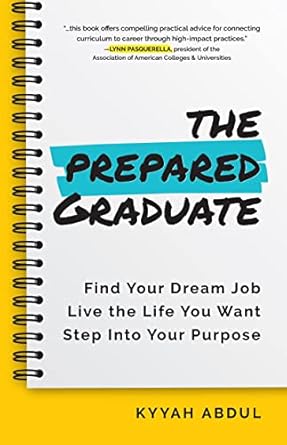
The book above the Prepared Graduate I recommend to every college freshman to read to be proactive while in school. Instead of being reactive after you get the degree.
One thing I take issue within a big way: she gives a sample pitch letter to send a person on LinkedIn in an attempt to snag an internship.
No—not at all should your first sentence be: Hope you’re doing well. It should refer to a new achievement of theirs and talk about why this victory impresses you.
(I learned this in a Zoom event the Roadmap Coach Christina Bryan hosted for leveling up your presence and persona in your career.)
Then the pitch should list how it would benefit them to hire you as an intern. To infer that doing so will enhance their reputation not just score you a job post-graduation.
After this you can list your school and your major. It’s the same thing as asking for 10 or 15 or 20 minutes of a person’s time to talk about questions you have about the field and line of work (traditionally called an information interview.)
Like I wrote 2 years ago in Working Assets your sales pitch should be about how you can help them with a project near and dear to their heart.
The one last issue I have is with the end of the subtitle attesting that you will be able to Step Into Your Purpose.
Should a 22 year know their life’s purpose so early in their lifetime on earth this time around? I would say this is where creating an Action Grid while in school or collecting SSI or SSDI can help. I talked about the Action Grid in Working Assets my career guide.
The subtitle should be “Step Into Your First Purpose” as in your first purpose at this stage of your life. In my last semester of college, I only wanted to publish books and invest in the stock market and travel to Sicily.
Still told The Prepared Graduate has other winning advice. The number one call out is getting a job related to your major while in college. Instead of taking any old job like flipping burgers to pay your bills. What if you can’t get an internship or job linked to your career while studying?
Be creative. Teach yourself a skill it would impress a hiring manager to know that you have. Start a professional podcast on the subject you’re studying for. Keyword in that sentence: Professional. Join a club on campus linked to the career—like the Student Marketing Association if you’re getting a degree in the field of marketing.
Plus, a professional organization devoted to your career might have a student membership option. Join—as the fee can be lower for a student.
 WorkingAssets
Recent Comments