
Here’s the link to my latest Bruni in the City column for City Voices Peer Mental Health Journal.
Author: Christina Bruni
Christina Bruni is the author of the new book Working Assets: A Career Guide for Peers. She contributed a chapter "Recovery is Within Reach" to Benessere Psicologico: Contemporary Thought on Italian American Mental Health.
One-Year Pandemic Anniversary
March 14, 2021 was Remembrance Day in New York City to honor those we lost to the coronavirus pandemic.
Do this for America is what I urge followers: get the COVID vaccine like I’m doing soon. The only way to eradicate the coronavirus is to use science to improve recovery outcomes.
Isn’t that what any recovery is based on: science and kindness.
Continue to wear your mask. Even when you’re inoculated. We’re not out of the thick of the forest yet.
Stay 6 feet apart. Wash your hands often for 20 seconds each time.
With the unseasonable mild weather here I remember that one year ago everyone was sheltering indoors. No one was going outside yet. Now that we can go outdoors I find it a struggle to breathe the air under the mask.
It’s easy to take things for granted every day. I recommend writing 5 things you’re grateful for in a grateful journal every other day. You can write too 5 things that make you happy.
Today I’m grateful more than ever for the air I breathe.
In here in future blog entries I would like to feature other Guest Bloggers living in recovery.
I was also interviewed for psycom.net so wait for a link to the interview coming up in April.
Our best chance of ending the pandemic is remaining vigilant. Get the vaccine as soon as you’re eligible.
I firmly believe we have better things to look forward to.
Together we can recover our mental health. We can recover from the pandemic in due season.
Reentering the Workforce After a Breakdown
Ashley Smith blogger extraordinaire is featured today as my Guest Blogger talking about:
Reentering the Workforce After a Breakdown.
In her own words she’ll talk about her experience plus give tactics that could help peers.
How to Reenter the Workforce After a Breakdown:
I worked many jobs prior to my first breakdown at age 20. I started working when I was 14 years old. I struggled to maintain jobs, but didn’t understand why. I didn’t know I had a diagnosis. My last breakdown occurred in 2018. There were a series of stressful events that led to my meltdown.
After the hospitalization I participated in weekly therapy sessions and developed an extensive health plan. I worked hard to build myself up to return to work. I carried out a range of steps to restore wellness. I managed a daily routine which consisted of walking around my neighborhood for 15 to 45 minutes, journaling, listening to entrepreneur empowerment talks on YouTube, and reciting affirmations along with my prayers. I kept all doctor and therapy appointments and continued to take my medication.
I developed a variety of projects such as my book, Coping Takes Work. I also took on small jobs as a freelance writer and blogger. When I built up my confidence I steadily applied for jobs. I utilized my network and let associates know that I was looking for work. A great resource that I utilized for my job search was reading Christina Bruni’s book, Working Assets. The book is filled with important tips and strategies on how to re-enter the workforce while living with a diagnosis.
It took several months to get back into the workforce due to my health concerns, COVID-19, and job availability. I didn’t take the first job that was offered to me, because I weighed my pros and cons. I was mindful of my family needs and the demands of the position. When I accepted my job I made a commitment to focus on stress management techniques to maintain wellness in order to work.
Yet, keeping a daily self-care ritual is challenging. However, I learned to recognize when it’s time to change my routine. Currently, I manage my health by practicing stress management skills. My stress management plan consists of self-reflection time, confidence-building activities, and participating in therapy.
Finally, as I reflect on my experience I urge peers to create an individualized plan of action to maintain their wellness and jobs. I support alternative healthy coping skills that help people. Lastly, I define recovery as staying in your good place, therefore, create that good place by managing your stress and taking control of recovery and life as best you can.
–Ashley Smith
Read her blog at Overcoming Schizophrenia here.
Self-Disclosure: Boon or Bust?
After reading an autobiography I’ve changed my mind about self-disclosure. Is self-disclosure a boon or bust?
Some food for thought on the pros and cons of telling others about your mental health history:
You must decide in the context of your own life what makes sense. In my view other people can feel burdened when you dump on them the details of your diagnosis as a matter of course. In the workplace it adds a layer between you and the other person.
On the other hand having a mental health challenge might give a person the reliability, consistency, and persistence to carry out their work and life goals on and off the job.
Stereotypes exist about people diagnosed with schizophrenia. This is why I make the case that a peer’s identity should not be defined by our symptoms. It places us in a diagnostic box that is hard to get out of. Unless you have a job in an evolved workplace where people are open-minded.
Seeing beyond diagnosis to the person inside is the goal as I see it. To “smash the stereotype” peers should act true to ourselves as individuals.
Like the leaders in The Queer Advantage it comes down to the fact that those of us who have struggled are often able to persist despite the hardship.
The skills, abilities, and strengths we use in recovery are the traits that give us the ability to succeed on the job.
My LinkedIn Profile refers to my memoir Left of the Dial. My story is out in the open this way on LinkedIn the professional networking site.
The trend going on now is for peers to tell our stories. I ask you though: does everyone in the world need to know every detail of our symptoms and illness? In my memoir I only gave readers what I talked about in the poem on the first page: some of me.
In this regard I was a fan of Brene Brown and her work on vulnerability. You need to trust the person you disclose to.
How will they use this information after you give it to them? My friend Robin was denied a promotion when a coworker he disclosed to tattled the diagnosis to a supervisor.
This is the reality in the often shark-tank world of corporate business.
On the other hand like said there can be an advantage to having a disability. Maybe a book should be titled The Mental Health Advantage.
Mental illness should not remain a taboo subject to talk about. A friend referenced me in giving a talk on a show about Italian culture. Referring to how I have come out about my experience in the way LGBTQ+ individuals are boldly talking about their lives.
The bottom line: our diagnosis does not define us. We need to define ourselves–or someone else will do this for us.
Who is Christina Bruni? I’m a Girl on the Left living her life Left of the Dial. My favorite color is green. I’m gregarious and down-to-earth.
Who are you? The world needs you and your gifts. Be not afraid to act true to yourself.
It’s your choice whether you disclose and what you tell people.
The Italian American writers’ group I belong to has a quote that sums this up well:
Only silence is shame.
Until mental health becomes a front-porch topic talked about over a glass of lemonade the secrecy will continue to breed fear and ignorance about what it’s like to live with a mental illness.
The Power of Identity
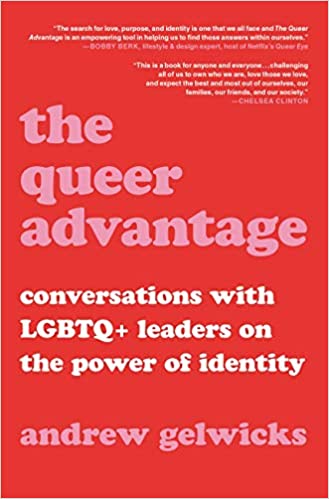
The Queer Advantage: Conversations with LGBTQ+ Leaders on the Power of Identity by Andrew Gelwicks is a book that was published in 2020.
Quoting esteemed individuals in different fields the author makes the case that acting true to yourself and being authentic is the only way to succeed on the job and in your life.
No one should feel guilty and ashamed for being who they are. In reality other people should not hate and judge you because of your identity.
From the book:
“Everyone should be able to bring all of themselves to the workplace and feel like they don’t have to hide or cover. You can only be your best when you embrace your authentic self… [It] is my lifelong commitment to achieving equality for all that has always been the driving force in everything I do.”
– Billie Jean King, Professional Tennis Player
The question is: how do your bring all of you into your job when you have a mental health issue?
The choice is yours what to reveal and what to conceal. It’s still dice-y to disclose on a random workday as a matter of course.
The way I see it: the illness does not define me. I choose not to talk about it randomly or indiscriminately with the people I interact with on an ordinary day.
I would like that everyone walking down the street and in the corridors of a corporate office embraces and accepts individuals with mental illnesses.
Only I know we still have a way to go in terms of civil rights for those of us with a diagnosis.
Perhaps the way to chip away at other people’s fear of us is indeed to be open and honest about this facet of who we are.
We can take a tip from the leaders in The Queer Advantage.
It’s your right and preference to decide how open and honest you want to be.
In a future blog entry I will go into detail about the ins and outs of self-disclosure.
Loving Your Labor
It’s time to redefine what constitutes a “career.”
You don’t have to be an attorney with a JD from Yale or a famous writer to have a happy, healthy, and fulfilling life living in recovery.
The now-defunct SZ magazine featured an article about what a person with negative symptoms of schizophrenia could do.
When you cannot hold a paid job you can do other things:
bake cakes, ride a skateboard, play guitar in a band, whatever.
The point is that each of us should be doing something with our time.
I submit that watching TV all day and not getting out of your house is the quickest route to illness and paranoia.
Now that the restrictions are easing in a lot of cities in America it’s time to rethink what’s possible for those of us living in recovery.
My belief is that a “labor of love” counts as a valid career.
On Saturday I met a person for lunch. New York City has started to allow indoor dining again.
I say: go to a coffee shop in the morning for breakfast
Risk asking someone to go to lunch like I did.
Lastly: I recommend doing volunteer work when you can’t work at a paid job.
What constitutes a career is as individual as you are.
Maybe you’re a ham radio operator. Maybe you sing in a church choir on Sunday.
Whatever you do you should be proud to do it.
All hail those of us living in recovery who face challenges. We get up every day and go out the door bravely to conquer the world.
No one should feel guilty or ashamed because they don’t hold “competitive” employment.
The Dignity of an Honest Job
I wanted to write about the dignity of working at an honest job.
Two opposite myths exist:
One–that people with schizophrenia and other mental illnesses can’t hold “competitive” employment.
Two–that there’s a shame attached to a person when they don’t hold “competitive” employment.
These are bold-faced lies not just myths.
In an earlier incarnation of my first blog I gave kudos to Rite Aid cashiers.
Most of them have been staffing the cash register for years and they do it with a smile.
Anyone who is rude to a cashier in a store or thinks that a cashier is below them should be set straight.
My Working Assets blog has celebrated it’s one-year anniversary this January 2021.
My work on the job of keeping this blog has only just begun.
Moving forward into the coming year and beyond I will expand the scope of jobs and careers in here.
I will also take on lifestyle issues for people living in recovery.
In the next blog entry I will talk about what constitutes a “career.”
What a person does for love is as equally valid as an occupation as what a person does for money.
One-Year Anniversary of Pandemic
It’s coming up on the one-year anniversary of New York City shutting down because of the coronavirus. March 14 is Remembrance Day in NYC. It reminds me of the 1980s Jim Carroll song about “All the People Who Died.”
The first 3 months of lockdown March through June were a kind of halcyon time for me. I started writing a novel and was blogging every week.
Coming up on one year it’s different. The prolonged lack of social contact can do a number on a person’s mental health. Add to that any other hardship and wham–a double shot of depress-o feelings and emotional wonkiness.
What is the remedy at this one-year milestone?
The spring is coming–so it might be easier to act: to take showers; dress in day clothes; attend Zoom events; cook your own dinners.
I’ve found that exercising every week as often I can has been the self-care that impacted my mood the most. Second up is writing entries in my grateful journal. Where I write 5 things I’m grateful for and 5 things that make me happy.
Listen: we will pull through this pandemic.
In the coming blog entries I’m going to write about what constitutes a career. This has been given new meaning in the time of the pandemic.
My aim is to empower readers to define for yourself what you “job” is in this life.
Not all of us will become a CEO, and that’s OK. Let’s hear it for the industrious janitors!
Finding Balance
Like Laurie Ruettimann advised in her book I advocate for committing to doing what makes you happy every week.
There’s a stigma attached to isolating in your bedroom when you have a mental illness. Besides that it’s not healthy to self-isolate. Isolation can breed illness and cause paranoia.
The difference is that when you’re in recovery and have a job or are otherwise active it can make sense to consciously choose to take a break from the demands outside your doorstep.
To preserve your sanity it’s imperative [and it’s possible] to achieve a work-life balance. You can have an “outdoor-indoor” equilibrium.
For some time now I’ve been engaged in the Italian practice of dolce far niente that is “the sweetness of doing nothing.”
For the most part I’m devoting time to my job and to publishing Working Assets the book. It’s akin to going into the woodshed by taking time to be alone in a room to practice and perfect the musical piece you’re playing.
After the challenges everyone of us has faced in 2020 it’s true that going into the woodshed can be an act of ameliorating our health. People who are in a plateau or in the woodshed can go on to recover and achieve things.
Trying to do herculean feats right now might not be possible for most of us. I recommend practicing the art of doing nothing when on some days you need to rest and recharge your batteries.
Rest and recreation can boost a person’s mood. This can give you the confidence to restart a major life activity refreshed and ready to go.
Giving ourselves the gift of chilling out is not a luxury–it’s an act of self-preservation. You will be a better parent or better friend to yourself or better partner after this time off.
The Compass and the Radar
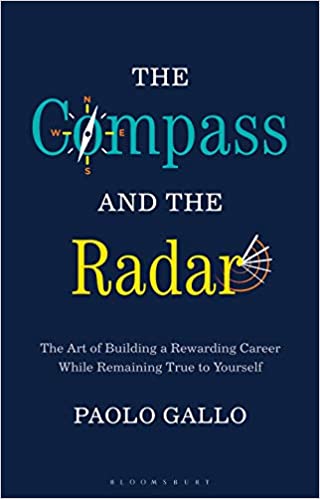
In the above book Paolo Gallo gives up-to-date tactics for finding a job on your terms.
He is Italian–which is inspiring to me as my heritage is Italian too.
The prime benefit of reading this book is knowing what questions to ask on a job interview. Gallo like Laurie Ruettiman in her book I reviewed too thinks you don’t have to wind up in a truly atrocious work environment.
By grilling the interviewer with poise you’ll be better able to uncover the true relationship dynamics on a future job.
I’ll end here with this quick and easy tip: Google “interview questions to ask employer.” You’ll find loads of probing questions to ask so that you can arm yourself with vital information.
The 1990s are gone. Heck we won’t see the early 2000s again either.
Today searching for a job and going on interviews is a different game. To level the playing field so you can achieve a “work-life balance” I’ll offer ideas in the coming blog entries.


Recent Comments