The Power of Identity

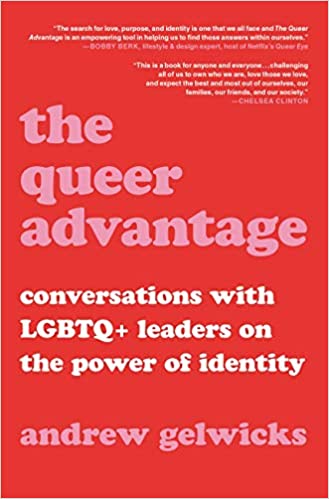
The Queer Advantage: Conversations with LGBTQ+ Leaders on the Power of Identity by Andrew Gelwicks is a book that was published in 2020.

Quoting esteemed individuals in different fields the author makes the case that acting true to yourself and being authentic is the only way to succeed on the job and in your life.

No one should feel guilty and ashamed for being who they are. In reality other people should not hate and judge you because of your identity.

From the book:

“Everyone should be able to bring all of themselves to the workplace and feel like they don’t have to hide or cover. You can only be your best when you embrace your authentic self… [It] is my lifelong commitment to achieving equality for all that has always been the driving force in everything I do.” 

     – Billie Jean King, Professional Tennis Player 

The question is: how do your bring all of you into your job when you have a mental health issue?

The choice is yours what to reveal and what to conceal. It’s still dice-y to disclose on a random workday as a matter of course.

The way I see it: the illness does not define me. I choose not to talk about it randomly or indiscriminately with the people I interact with on an ordinary day.

I would like that everyone walking down the street and in the corridors of a corporate office embraces and accepts individuals with mental illnesses.

Only I know we still have a way to go in terms of civil rights for those of us with a diagnosis.

Perhaps the way to chip away at other people’s fear of us is indeed to be open and honest about this facet of who we are.

We can take a tip from the leaders in The Queer Advantage.

It’s your right and preference to decide how open and honest you want to be.

In a future blog entry I will go into detail about the ins and outs of self-disclosure.

Loving Your Labor

It’s time to redefine what constitutes a “career.”

You don’t have to be an attorney with a JD from Yale or a famous writer to have a happy, healthy, and fulfilling life living in recovery.

The now-defunct SZ magazine featured an article about what a person with negative symptoms of schizophrenia could do.

When you cannot hold a paid job you can do other things:

bake cakes, ride a skateboard, play guitar in a band, whatever.

The point is that each of us should be doing something with our time.

I submit that watching TV all day and not getting out of your house is the quickest route to illness and paranoia.

Now that the restrictions are easing in a lot of cities in America it’s time to rethink what’s possible for those of us living in recovery.

My belief is that a “labor of love” counts as a valid career.

On Saturday I met a person for lunch. New York City has started to allow indoor dining again.

I say: go to a coffee shop in the morning for breakfast

Risk asking someone to go to lunch like I did.

Lastly: I recommend doing volunteer work when you can’t work at a paid job.

What constitutes a career is as individual as you are.

Maybe you’re a ham radio operator. Maybe you sing in a church choir on Sunday.

Whatever you do you should be proud to do it.

All hail those of us living in recovery who face challenges. We get up every day and go out the door bravely to conquer the world.

No one should feel guilty or ashamed because they don’t hold “competitive” employment.

The Dignity of an Honest Job

I wanted to write about the dignity of working at an honest job.

Two opposite myths exist:

One–that people with schizophrenia and other mental illnesses can’t hold “competitive” employment.

Two–that there’s a shame attached to a person when they don’t hold “competitive” employment.

These are bold-faced lies not just myths.

In an earlier incarnation of my first blog I gave kudos to Rite Aid cashiers.

Most of them have been staffing the cash register for years and they do it with a smile.

Anyone who is rude to a cashier in a store or thinks that a cashier is below them should be set straight.

My Working Assets blog has celebrated it’s one-year anniversary this January 2021.

My work on the job of keeping this blog has only just begun.

Moving forward into the coming year and beyond I will expand the scope of jobs and careers in here.

I will also take on lifestyle issues for people living in recovery.

In the next blog entry I will talk about what constitutes a “career.”

What a person does for love is as equally valid as an occupation as what a person does for money.

One-Year Anniversary of Pandemic

It’s coming up on the one-year anniversary of New York City shutting down because of the coronavirus. March 14 is Remembrance Day in NYC. It reminds me of the 1980s Jim Carroll song about “All the People Who Died.”

The first 3 months of lockdown March through June were a kind of halcyon time for me. I started writing a novel and was blogging every week.

Coming up on one year it’s different. The prolonged lack of social contact can do a number on a person’s mental health. Add to that any other hardship and wham–a double shot of depress-o feelings and emotional wonkiness.

What is the remedy at this one-year milestone?

The spring is coming–so it might be easier to act: to take showers; dress in day clothes; attend Zoom events; cook your own dinners.

I’ve found that exercising every week as often I can has been the self-care that impacted my mood the most. Second up is writing entries in my grateful journal. Where I write 5 things I’m grateful for and 5 things that make me happy.

Listen: we will pull through this pandemic.

In the coming blog entries I’m going to write about what constitutes a career. This has been given new meaning in the time of the pandemic.

My aim is to empower readers to define for yourself what you “job” is in this life.

Not all of us will become a CEO, and that’s OK. Let’s hear it for the industrious janitors!

Finding Balance

Like Laurie Ruettimann advised in her book I advocate for committing to doing what makes you happy every week.

There’s a stigma attached to isolating in your bedroom when you have a mental illness. Besides that it’s not healthy to self-isolate. Isolation can breed illness and cause paranoia.

The difference is that when you’re in recovery and have a job or are otherwise active it can make sense to consciously choose to take a break from the demands outside your doorstep.

To preserve your sanity it’s imperative [and it’s possible] to achieve a work-life balance. You can have an “outdoor-indoor” equilibrium.

For some time now I’ve been engaged in the Italian practice of dolce far niente that is “the sweetness of doing nothing.”

For the most part I’m devoting time to my job and to publishing Working Assets the book. It’s akin to going into the woodshed by taking time to be alone in a room to practice and perfect the musical piece you’re playing.

After the challenges everyone of us has faced in 2020 it’s true that going into the woodshed can be an act of ameliorating our health. People who are in a plateau or in the woodshed can go on to recover and achieve things.

Trying to do herculean feats right now might not be possible for most of us. I recommend practicing the art of doing nothing when on some days you need to rest and recharge your batteries.

Rest and recreation can boost a person’s mood. This can give you the confidence to restart a major life activity refreshed and ready to go.

Giving ourselves the gift of chilling out is not a luxury–it’s an act of self-preservation. You will be a better parent or better friend to yourself or better partner after this time off.

The Compass and the Radar

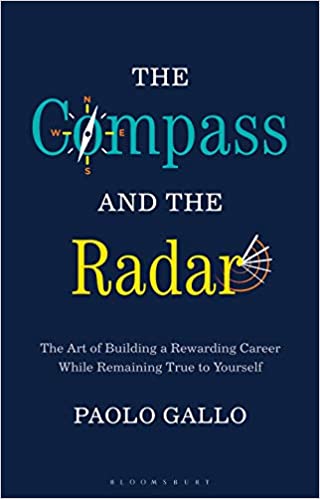
In the above book Paolo Gallo gives up-to-date tactics for finding a job on your terms.

He is Italian–which is inspiring to me as my heritage is Italian too.

The prime benefit of reading this book is knowing what questions to ask on a job interview. Gallo like Laurie Ruettiman in her book I reviewed too thinks you don’t have to wind up in a truly atrocious work environment.

By grilling the interviewer with poise you’ll be better able to uncover the true relationship dynamics on a future job.

I’ll end here with this quick and easy tip: Google “interview questions to ask employer.” You’ll find loads of probing questions to ask so that you can arm yourself with vital information.

The 1990s are gone. Heck we won’t see the early 2000s again either.

Today searching for a job and going on interviews is a different game. To level the playing field so you can achieve a “work-life balance” I’ll offer ideas in the coming blog entries.

Peace and Harmony

To enjoy peace and harmony on the job and in your life setting boundaries is a must.

In my life I preserve my energy for the essential tasks outside of my job. On the job I think you should prioritize your functions too. Why spend 5 hours on a task that will result in minimal benefit for your supervisor or business? This might rightly require only a half hour or one hour tops.

Doing the right job is more vital than doing the job right.

In the 1990s there was this slogan: “GIGO.” It was shorthand for “Garbage in, garbage out.”

Finding the job where you feel like you’re making a difference is the key. If you can’t see how your work improves your customer’s lives or makes society better in some way: I say all hope is not lost.

In the next blog entry I’ll review a book I read two weeks ago: The Compass and the Radar by Paolo Gallo. He’s on to something when he talks in the guide about building a rewarding career while remaining true to yourself.

Whatever you do on your job it’s imperative to enjoy life outside of your job. That is the best way to live in peace and harmony.

In coming blog entries I’ll talk about the old-age myth of finding a work-life balance. It isn’t a myth. This can be done.

Betting on Ourselves

Read the book above. You can check it out of the library should you not be able to buy it.

I recommend the book because long before I read it last week I’d been doing the things the author told readers to do.

One controversial thing that Ruettimann tells workers to do is to be Slackers on the job. How so? Not to break your back at work where you’ll wind up stressed.

Does any of us really want to be popping pills and slurping Frappuccinos to get by every day?

This is where it pays to research yourself and explore careers that are in sync with your personality.

My goal is to publish the book Working Assets: A Career Guide for Peers this summer 2021. It has competitive information for finding and succeeding at a job when you live in recovery.

The trick to being happy and healthy is to have a balanced life. I call this living “a full and robust life.” In your after-hours and on the weekend that’s when it’s imperative that you do what you love.

If you ask me no one should be doing more than a half hour of overtime every day at our jobs. Finding the job that doesn’t require overtime is the golden key to unlocking the ideal balance.

Most workers in corporate offices won’t get more than a 3 percent raise every year. Or 2 percent like milk. While the CEOs earn millions.

How to fight this injustice? Show up to your job on your own terms. Live that full and robust life outside of your day job.

Read Betting on You to find out how you can win the battle of the bulge–of your overstuffed briefcase and ballooning midsection.

There’s a better way than passively accepting the status quo on a job.

Long before I read this Laurie Ruettimann book I too had become a Slacker to preserve my sanity.

In the coming blog entry I’ll talk about my own strategies for achieving peace and harmony.

WFH Revisited

Setting up office space in your home is one thing. Showing up to your desk or dining table is another.

As hard as it can be I think you should make the effort to dress up. Wearing pajamas all day can put you in a depressed mood.

The question is: What comes first? Do you remain in your night clothes because you’re depressed? Or does wearing p.j.s flatten your mood?

Either way acting kinder to yourself is the way to go. Set 9:00 a.m. as the cut-off time. By this time in the morning try to be dressed in day clothes. Go easy on yourself on the days it takes you longer to get going.

I recommend writing entries in a grateful journal to record things you’re grateful for. Alternate these entries with writing 5 things that make you happy. A study reveals that keeping this kind of journal can boost a person’s mood.

OK–so you might not want to wear a suit to your home “office.” That’s OK. I recommend splurging on the Dressing Well Virtual Styling service. It costs you, yet the consultant can send you links to clothing items you can buy online for this “new normal” WFH scenario.

In the coming blog entry I’m going to talk about a cutting-edge book I read last week. Reading this book can infuse those of us stuck in dreary jobs with optimism and give us a clear path to freedom.

Wonky Work Email Situations

I wanted to talk about sending and receiving work emails. For people who want to get a job and haven’t worked before in an office.

One thing you’re going to come across is that people won’t respond to your emails. Most coworkers will respond. Others will repeatedly fail to respond when you send them a message.

How I operate with email: It is a permanent electronic record. My take is that I would send an email when I wanted to document something to have proof of what is going on.

Anything you say or do on a job that you don’t want to be a matter of public record should not be sent via email.

What can you do with people who don’t respond to your emails?

Sometimes it turns out that sending an email is not the most effective communication tool.

Getting up off your chair and walking to the coworker’s desk to talk might be the better option in this case.

One other situation is that obsessively checking your email can be a time-waster.

At one job I refrained from checking emails first thing in the morning. This was the policy. We were supposed to get right to the work for that day.

I would say that it could be good to check your email during your down time when you have a lull in energy.

Often you will use email to request information from a coworker who is working with you on a project. This is one use of work email.

In a coming blog entry I’m going to talk in more detail about working from home / WFH.