Rocking Authenticity At Work

This radical idea struck: To write in here about the competitive advantage you have in not conforming.

Albert Einstein was a genius. Was he hanging out at the water cooler all day chatting with colleagues? Likely not.

Danny Rojas the Container Store’s Sr. Manager of Talent Acquisition spoke on this theme in an interview on the Container Store website:

Re: the fallacy of blending into the company culture and the benefit of a DEI ethic:

Rojas thinks that your being different–your individuality–can improve the culture of the company you work at.

How can you and I best add to the dynamic: By remembering that “not conforming” is not a free pass to acting convfrontational with coworkers.

I have a definite idea about the old chestnut of “acting true to yourself.” I believe everyone living on earth in this lifetime is here to experience karma. It’s not the punishment for prior sins. It’s the gaining knowledge of what you didn’t know before–like the evolution of your soul animated in this body and mind.

As not everyone we interact with is pleasant or dandy I think accepting others as they are and letting them be themselves is the key to inhabiting planet Earth with less friction and animosity among those of us with opposing ideologies.

Expecting a person to show up as their authentic self is key. This should be the playbook for interacting with people whose worldview is different from ours:

I accept and affirm how others feel. I make them feel seen and heard. I uphold that they are safe to express what they think and feel in my presence. I honor and celebrate their individuality.

Right. Not everyone else is going to operate this way–and not often likely toward a person living with a disability. Yet this is the ethic I think we should strive for.

At work you’ll rub elbows with the world. Though I failed big time working in the corporate and law offices I credit that early first experience with exposing me to coworkers from different walks of life.

Acceptance should be reciprocal: I allow you to act true to yourself and you allow me to act true to myself.

What about when a person has a mental health issue and they’re employed? Coming up my extended take on disclosure.
Presence and Persona

I attended a Zoom talk on Presence and Persona: Leveling Up Your Personal Brand.

I cannot repeat the exact method the speaker Christina Bryan told us to use. It is her approach.

Instead I recommend you go on her website The Roadmap Coach. She is a Black businesswoman who coaches other women. I intend to pay for her coaching service in the future. As after listening to her talk I got fired up.

In my own words here I’ll tell you about how to create be and sell your personal brand for everyone of any identity. It’s simple really: who you are and what you stand for is your brand on and off the job.

Like Bryan said: “Be authentic.”

It’s imperative to “stay in your lane” and avoid going “off-brand.”

This is why I’ve pivoted on a dime to not talk about politics in my blogs again. It would detract from and dilute my message. As I think each of us has what I’ve coined the “self-power” to go after our goals regardless of the political climate.

In a coming blog entry I’ll talk about my views on capitalism. Here I’ll tell followers that you should not have to act false to yourself anywhere you go to promote your brand.

Zoom speaker Bryan told us women to: “Be your authentic self. Let you come through.”

I think Christina Bryan’s method for personal branding is better than the 5-step plan I read in a book that I might have reviewed here years ago.

Promoting yourself might not come easy. Which is why I think it pays to read what I wrote in the recent blog entries here.

You can be driven AND decent. You don’t have to be “relentless in pursuit of your goals.” If you’re tightly wound that will cause ill health.

In a future blog entry I’ll talk about setting goals.

Selling Ourselves

In an instant two years ago the thought hit me that every interaction you have with another person involves sales. I can’t shake this idea even today.

Though I’ve read a book on creating and using your personal brand I think having a Personal Brand should be linked to who you are. No presenting a false self. Bringing your beautiful self to the table.

From how I interact with the others in the online fashion group I’ve figured out that you don’t need hundreds of clothing items stuffed in drawers and closets.

Nailing your presence and persona is as simple as choosing with care what you wear. Plus it hinges on not being afraid to voice what you think.

Your ideas count in a meeting at work. You shouldn’t be talked over or scared to speak out either.

I recommend having a friend shoot photos of you to insert in a “look book”–a photo album to review. Or they or you can use your cell phone to create an Outfits Photo Album.

One thing I recommend too is getting your colors done with a reputable person. I’ve known since attending a Colors Workshop in 1993 that I’m a Winter. This is because I have a pink undertone to my skin/a cool complexion, dark brown eyes, and black hair.

One way to get your colors analyzed is with Anuschka Rees and her Color Guide. For women to find out about the fashion community and other services go on Dressing Well. Men can also use the Dressing Well Virtual Styling program. There is a fee for the Virtual Styling. Not cheap yet cheaper than other personal styling offerings.

It should come as a relief that once you figure out winning outfit combinations you’ll have an easier time getting dressed in the morning. Repeating these outfits is OK. Definitely OK.

You can buy on Amazon the Greatim wall-mounted valet a clothing rack. It swings out to hold clothing items on hangers on 5 cut-out circles. The night before I hang on the rod the outfit I want to wear in the morning. I’ve even typed up a list of outfit combinations for each of the four seasons. Inserted them on a clipboard to check off the items I wear every day.

Again this is not to upset followers. It’s to make it quicker and easier to get dressed when you wake up. Giving you the best start to the day.

The purpose in polishing your Initial Persona Offering is precisely to give us ease in interacting not just with coworkers. To have a better time of it with all our relationships. If you’re not socially savvy to begin with this is exactly why dressing well can help give you confidence. It’s a cliche because it’s true that when you look good you feel good

I recommend followers buy my book Working Assets: A Career Guide for Peers where I talk in detail about finding and succeeding at a job.

Coming up I’m going to feature a Case Study of a peer who is successful in business. Then talk about applying for and getting a job this year.

Sartorial Self-Care for Peers

I studied the life work of Caroline Myss a medical intuitive. Her concept of Archetypes is right-on. Studying this I found out that I have a Fashionista archetype. There is such a thing!

Everything clicked into place after I bought and read the book Wear It Well by Allison Bornstein. Using the personal stylist’s Three Word Method I defined my style as Chic Quirky Confident.

Choosing and using wardrobe items for everyone not just women is a form of self-care. When dressing up gives a person joy they should not be ridiculed for their love of fashion.

This kind of self-care for us peers can help us feel good interacting with others. Dressing well can give us ease in our relationships. Years ago I met a peer who told me that this is why they dressed to appear normal when going outside. Precisely because your appearance is judged.

I joined a private online fashion community a year ago. Women post photos of outfits we’re dressed in to request feedback. I’ve figured out winning outfit combinations this way.

Everyone is positive. There’s a $25/monthly fee. This keeps out the trolls and anonymous hateful comments.

Polishing your presence is just a book or click away then. I completed a 5-outfit challenge for January by creating 5 new outfits out of clothes I already own.

“Shopping in your closet” is the way to go. Plus it’s OK to repeat outfits. Particularly when the outfits are “winners.”

Once you’ve fashioned this wardrobe it’s easier to choose and use clothing items each day. Think in terms of how you want to come across.

By automating your outfit choices you’ll have extra time in the morning. Start the day with an edge once you’re going out your front door.

Coming up a blog carnival of related topics beginning with my approach to dressing. Then a deep dive into what I’ve learned after viewing the webinar on Presence and Persona for women.

After this a focus on conducting a job search effectively linked to my recent experience helping out peers get jobs. Lastly a review of what I’ll call a “case study” in succeeding in business as a peer.

Making an IPO

I’ve invented an approach to getting a favorable outcome in the workforce. It shouldn’t upset followers that I propose this. This is because allegedly a person forms an impression of you within 7 seconds.

All along I’ve had ideas about how to dress. I’m 59. No longer do I care what others think of me. Nor do I have any interest in trying to impress people who would hate judge fear or shame me.

In my Girl on the Left blog I wrote that I think if you’re dressed chic you can get away with being a radical on the inside.

A few years ago too I thought that everyone is a work of art. We can delight the viewer. Yet even with a work of art whether the viewer likes us is subjective for each person looking at the artwork.

I’ve coined the term Making Your IPO–your Initial Persona Offering. I think every interaction you have with another person involves sales.

To get them to buy into whatever you’re selling–either you; an idea you have at work; a belief you hold–each of us should demonstrate why they should buy in and the benefit in doing this.

The second thing is to give them equity like “stock options” that are ownership in the company whose product you’re selling. A person has to want to do what you say. Again attacking your target market that you want to convert will cause those people to resist and get defensive.

The idea of making your IPO upends the idea of creating a Personal Brand. I think too that the best personal brand is a reflection of who you are and what you stand for. It’s as simple as that.

We should make our Initial Persona that we offer others our own beautiful self. Acting true to yourself is the best way to sell your own unique brand. Jazzing up our appearance is not vain or calculating. It’s a way to level up your presence. Which in the end feels good to you. Not just to the viewer.

The real thing when you’re just starting out in recovery is that the hair could be uncombed. The shoes are scuffed.

Or like I did I wore regular sized clothing when I was a Petite size. So the blazer was as big as my Grandpa’s and the sleeves were too long too.

Even with all its scandals Nike is a brand to research for understanding how it generates fierce fans of its products. Read the book which I might have reviewed in here: Emotion by Design by Greg Hoffman who worked at Nike for decades.

In the next blog entry I will talk about things I’m doing to polish my persona. It’s not bulletproof that everyone will always buy into what you’re selling. Yet like I said in that other blog dressing well helped me recover. That’s the real impact of leveraging how you look: You take joy in getting up in the morning and going out the front door.

Acting Vulnerable on the Job

No other expert has talked about risking becoming vulnerable at our jobs. There’s scant research into and advocating for bringing “All of You” into the workplace.

What’s written does point to the economic advantage companies have when employees are treated right and feel like we belong. Hello–where is that business and how can we apply?

My goal is to help peers with mental illnesses find jobs with employers who recognize, accept, value, and celebrate the differentness of every human being.

We should not shy away from using the word differentness. It has nothing to do with not being normal. Not that being normal is such a great prize to begin with.

Our differentness is a competitive advantage.

We are not robots. We are not machines. Though we will break down under the unrealistic pressure to be someone we’re not.

I’m thinking long and hard about the solution to this dilemma. How it hasn’t been okay to cry at the office. Or show other emotion. It’s said that in the workplace forced positivity has been expected.

In the coming blog entry I will talk about how trauma can influence what we do and say at our jobs.

Should we make ourselves vulnerable with coworkers?

Finding the Right-Fit Job or Career

It’s a myth that you can do what love and always be paid what you’re worth.

The solution is to have what’s commonly called a “side hustle”–a second job or income stream. In addition to your “day job.”

The fact is that when you work for a business or for anyone else you have no control over the trajectory of your work history.

How to gain control?

To be proactive in choosing a career that is the right fit with your personality.

In this blog I wrote about a year ago about taking a detour.

In my own life I spent 9 years in corporate and legal jobs. The first 7 years in insurance offices. The second 2 years in a law firm library.

Figuring out quick that though the new job was in the library field I wouldn’t get ahead playing by a supervisor’s rules. I was passed over for a promotion there. This turned out to be a good thing.

Today I’m a professional librarian in a public library. For close to 9 years I had a second job as the Health Guide at a mental health website.

The point is I didn’t recover until I found this job that was the right fit with my personality.

Wherever you work whenever you are subject to having a supervisor give you a performance review your career path is in someone else’s hand.

Thus my enduring urge to tell readers and audience members to have a second job or income stream in addition to our day jobs.

The yearly evaluation your supervisor gives you can seem capricious.

Though I favor acting true to yourself I remain skeptical about always disclosing your mental health issue to your boss and coworkers in the workplace.

This is because it can influence how your supervisor rates you and how much money you get in a raise.

Is this universally true? No it is not. Yet it is a distinct possibility.

Coming up in the next blog entry how to navigate what happens when you receive a performance review.

The better you like your job and what you do for 7 hours 5 days a week the easier it will be to take your yearly rating in stride.

My experience has been that different supervisors have different personalities. Their worldview and their own quirks in how they perceive other people factor into how they rate your performance.

I will use a “case study” approach from my own files to demonstrate why working at a job you love and having a side hustle could be the way to go.

Born This Way

In an earlier blog entry I talked about finding the work environment where you can be yourself and thrive.

My aim here is to give readers a shot in the arm of confidence so that you can Be Who You Are Not Who the World Wants You to Be like a magnet I bought attests.

The term Born This Way is a manifesto that everyone should be proud of.

I’ve been told over and over that I’m “the exception to the rule.” I feel crummy when I hear this. As if there is a stereotype of how people with schizophrenia live and act and dress.

Mumbling on the street. In tattered clothes. And what if one of us appears that way? We shouldn’t be viewed any worse than others.

This is what I don’t like as an author and a human being: I detest stereotyping people. That is: viewing everyone of the same race or gender or ethnicity or disability as having the same characteristics. Simply because of your interaction with one person of that race or gender or ethnicity or disability.

In this “disability box” outsiders use our symptoms as the proxy for who we are.

Outsiders can’t see beyond illness to accept us as “individuals who” have schizophrenia. Often it feels like our personality traits and our humanity are discounted as factors that enabled us to persist in the face of emotional challenges.

Our road might be harder yet that’s no excuse top give up. At the end of this blog entry I’ll give a link to an online Zoom event I cohosted at the 15th Annual Peer Conference in July.

The workshop was titled “Editorializing Lived Experiences: Creating an Authentic Voice and Impactful Message in Professional Writing.”

The key word in that title? Authentic.

To claim and assert our individuality is the only way you and can succeed in life and in recovery.

Maybe I knew this all along when I showed up to that day program in 1989 wearing vintage pajama pants in the summer?

The YouTube video of the Peer Conference Workshop is 1 hour 5 minutes.

You can watch and listen to it here: https://youtu.be/ktH1ZRi19gc

Self-Disclosure: Boon or Bust?

After reading an autobiography I’ve changed my mind about self-disclosure. Is self-disclosure a boon or bust?

Some food for thought on the pros and cons of telling others about your mental health history:

You must decide in the context of your own life what makes sense. In my view other people can feel burdened when you dump on them the details of your diagnosis as a matter of course. In the workplace it adds a layer between you and the other person.

On the other hand having a mental health challenge might give a person the reliability, consistency, and persistence to carry out their work and life goals on and off the job.

Stereotypes exist about people diagnosed with schizophrenia. This is why I make the case that a peer’s identity should not be defined by our symptoms. It places us in a diagnostic box that is hard to get out of. Unless you have a job in an evolved workplace where people are open-minded.

Seeing beyond diagnosis to the person inside is the goal as I see it. To “smash the stereotype” peers should act true to ourselves as individuals.

Like the leaders in The Queer Advantage it comes down to the fact that those of us who have struggled are often able to persist despite the hardship.

The skills, abilities, and strengths we use in recovery are the traits that give us the ability to succeed on the job.

My LinkedIn Profile refers to my memoir Left of the Dial. My story is out in the open this way on LinkedIn the professional networking site.

The trend going on now is for peers to tell our stories. I ask you though: does everyone in the world need to know every detail of our symptoms and illness? In my memoir I only gave readers what I talked about in the poem on the first page: some of me.

In this regard I was a fan of Brene Brown and her work on vulnerability. You need to trust the person you disclose to.

How will they use this information after you give it to them? My friend Robin was denied a promotion when a coworker he disclosed to tattled the diagnosis to a supervisor.

This is the reality in the often shark-tank world of corporate business.

On the other hand like said there can be an advantage to having a disability. Maybe a book should be titled The Mental Health Advantage.

Mental illness should not remain a taboo subject to talk about. A friend referenced me in giving a talk on a show about Italian culture. Referring to how I have come out about my experience in the way LGBTQ+ individuals are boldly talking about their lives.

The bottom line: our diagnosis does not define us. We need to define ourselves–or someone else will do this for us.

Who is Christina Bruni? I’m a Girl on the Left living her life Left of the Dial. My favorite color is green. I’m gregarious and down-to-earth.

Who are you? The world needs you and your gifts. Be not afraid to act true to yourself.

It’s your choice whether you disclose and what you tell people.

The Italian American writers’ group I belong to has a quote that sums this up well:

Only silence is shame.

Until mental health becomes a front-porch topic talked about over a glass of lemonade the secrecy will continue to breed fear and ignorance about what it’s like to live with a mental illness.

The Power of Identity

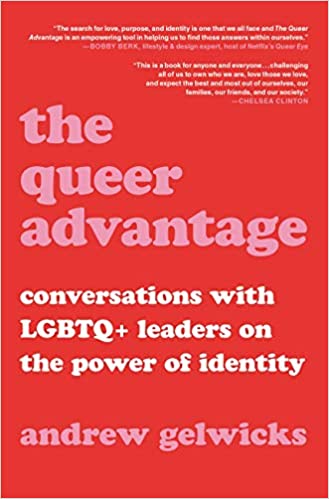
The Queer Advantage: Conversations with LGBTQ+ Leaders on the Power of Identity by Andrew Gelwicks is a book that was published in 2020.

Quoting esteemed individuals in different fields the author makes the case that acting true to yourself and being authentic is the only way to succeed on the job and in your life.

No one should feel guilty and ashamed for being who they are. In reality other people should not hate and judge you because of your identity.

From the book:

“Everyone should be able to bring all of themselves to the workplace and feel like they don’t have to hide or cover. You can only be your best when you embrace your authentic self… [It] is my lifelong commitment to achieving equality for all that has always been the driving force in everything I do.” 

     – Billie Jean King, Professional Tennis Player 

The question is: how do your bring all of you into your job when you have a mental health issue?

The choice is yours what to reveal and what to conceal. It’s still dice-y to disclose on a random workday as a matter of course.

The way I see it: the illness does not define me. I choose not to talk about it randomly or indiscriminately with the people I interact with on an ordinary day.

I would like that everyone walking down the street and in the corridors of a corporate office embraces and accepts individuals with mental illnesses.

Only I know we still have a way to go in terms of civil rights for those of us with a diagnosis.

Perhaps the way to chip away at other people’s fear of us is indeed to be open and honest about this facet of who we are.

We can take a tip from the leaders in The Queer Advantage.

It’s your right and preference to decide how open and honest you want to be.

In a future blog entry I will go into detail about the ins and outs of self-disclosure.