Our mental health on the job should be our first priority. If you’re harassed and the coworker has violated the guidelines I say figure out the right person in HR to email your grievance. Document in the email the name of the employee their job title and dates times and specific illegal behavior committed.
In my experience if you tell your immediate supervisor they won’t go to bat for you with HR. This is because they want to cover their own *ss. They could be implicated in having allowed the harassment to happen.
Some companies require all staff to watch an anti-harassment video each year. In my experience too a harasser could watch the video and nothing will change about their behavior.
You can Google definition and types of on the job harassment should your employer not require you to watch a video.
I’ve been harassed on a job. It’s likely more common than not that a person could get harassed on the job.
You should use your cellphone notes or journal app to record the information before you send the details to the HR person.
Coming up ideas on how to preserve your mental health on the job.
A person’s anonymous resume might get them called for an interview. Once the hiring manager sees the candidate in person it could influence whether the person gets a job offer.
Today AI is used in the interviewing process. Hiring managers are using AI to figure out who’s the best applicant to hire. Artificial intelligence–not a person’s own intelligence–is now a factor in helping an interviewer decide who to give a job offer.
As well you and I cannot get around using AI on our jobs. There are even AI resume builders. In fact using the software could lead to every job applicant creating an identical AI resume.
I don’t think this the way to go about choosing who to hire. If a company is using the “same old same old” criteria for who they think is best qualified to do a particular job that’s not a competitive approach if you ask me.
Two other ways are to have a candidate come in for a one-day work trial or to submit a work sample.
“Business as usual” should not be the standard operating procedure.
I’ve chosen to pay for a ChatGPT individual account. As I’ve read that you can use AI to type in a list of food items you have. Then the bot will generate a list of recipes you can create with the food you have.
This is one use of AI that I can recommend. As otherwise AI can be biased and generate what’s called hallucinations or information that is not right. There’s also the issue of AI software violating the original content creator’s copyright.
Yet even with the drawbacks I think everyone seeking to get a job should become proficient in using AI. Better it is for all of us to learn and use AI judiciously.
The difference is in analyzing the AI output and customizing it to your needs. Instead of relying on cutting-and-pasting the information without discerning if it’s good to go as is.
Coming up in future blog entries I will talk about preserving our mental health once we get our jobs.
Holy cannoli–if a person cannot craft an ideal current LinkedIn profile for themselves on their own: they should head to the local public library to see if there’s a trained librarian there giving career help.
Two LinkedIn profiles stand out in my experience: one was so terrible I couldn’t believe it and the person created it on their own.
The other person who wrote their first LinkedIn profile on their own without help crafted a pitch-perfect impressive account.
The latter was the kind of person I would connect with. When it comes to your LinkedIn connections quality counts more than quantity., I had to un-connect with a person who wrote outlandish comments that would appear in my LinkedIn feed.
Really if you have a strike or two against you with any kind of illness or disability do you want to appear strange or eccentric or in any way not professional in how you conduct yourself in a business networking forum for the purpose of finding a job or giving others recommendations for jobs?
I can see if you’re in a creative field or are some kind of “rock star” and even if you’re an ordinary person breaking the rules disrupting the status quo AND getting results in your field:
Then by all means fire away with the eccentricity on LinkedIn if you want to connect with kindred business partners.
I’m going to end here with this advice: should it be taking you longer than 4 months to find a job you should be offering your skills and service pro bono to list on your resume to account for you time off.
I help new college graduates all the time who have gorgeous experience and education credentials. It’s so competitive out there that sometimes a new college graduate won’t get a job offer until they’ve been going on interviews for five months or longer.
I tell all these future superstars to keep using their skills pro bono to list on their resume while they’re seeking their first job.
It’s especially hard when you’ve just gotten a computer science degree to get a job right away.
I help peers of all ages find jobs in different fields. The format of the sample resume in Working Assets has become outdated. Go on my website and click on the Career Updates menu header on top. There’s a new link on that page to sample resumes using the new format.
Other than this I wish more people would buy Working Assets. Thank you for everyone who is buying the career guide. The information stands the test of time.
And I wish more people would follow my Working Assets career blog. I’m giving individuals light-years ahead information that can help peers succeed on and off the job.
Coming up a blog entry about how the use of AI–artificial intelligence–is gaining traction as a method to decide who to hire for a job.
Lower standards are given everyone it appears and this has a historical precedent:
In college in the 1980s an English professor told me that the term paper topic I chose was too hard. He had me pick an easier one. This discouraged me. Luckily I got a B in the course not a C.
High school students are given no motivation to do their best either today. A White female public school teacher told her Black students: “It’s OK to just get a 75 grade.”
Skill sets for Black White and every other person have to be modeled and taught to kids as early as kindergarten. Why do you think public libraries host story times where children’s librarians read books to babies and toddlers and encourage their parents to read to kids as soon as the child is born?
Makes sense right.
Today there are college graduates who can’t compose a proper English sentence let alone create an effective LinkedIn profile. Some of them have master’s degrees. No kidding.
The solution is NOT to throw the DEI baby out with the bath water to use that expression. I still think the judicious use of affirmative action and DEI workplace policies should be mandated.
Happier healthier workers will be more productive and help their companies generate increased sales. Again I might refer followers to read the book Emotion by Design by Nike’s former Chief Marketing Officer Greg Hoffman. He started as a Biracial art intern at Nike and rose up to be the CMO.
No kidding. If your employees look like your customers and share your fan base’s culture that’s a win-win every time right out of the starting gate.
In this blog I’m going to write about hot topics to give ideas and insight about a better way of approaching employment issues.
DEI efforts post-hiring in the workplace are really a back-end fix to a front-end problem: no call-backs given to applicants with Black sounding names on resumes.
Research using two identical resumes except for the job seeker’s name have revealed that there are fewer or no calls to the Black candidates who applied.
The solution is to require anonymous resumes. Perhaps a hiring manager when getting resumes uploaded online can have the job seeker remove their name and use a computer-generated number code for each un-named resume to be identified.
The book above talks about this solution. Author Coleman Hughes is against affirmation action whereby the standards are lowered across the board—in classrooms, college admissions, and job hiring—for Black Americans. I had no idea this was the case—I thought only qualified candidates were considered.
In the book Hughes verifies that President Obama lowered the standard for Black Americans to apply for air traffic controller jobs.
He urges a return to Martin Luther King’s vision of our common humanity and a truly color-blind society in terms of race not solely mattering in the scheme of who gets ahead.
Not that I ever thought only White Americans were qualified to hold jobs. Hence my historical perception that we needed to level the playing field.
Hughes urges The End of Race Politics as it has been practiced: the segregation of Americans along color lines and the media darlings’ reinforcing of Black victimhood and the guilt they think White Americans should have.
Let’s not take this bait. No one of any skin color should be made to feel ashamed for the color of our skin. There’s no apology needed for being White. Or Black. Or whatever shade you are.
Hughes calls the current anti-racist proponents ideology about how to help Black Americans “reverse racism.” To Hughes this is a barrier to true racial equity. The woke crowd would be out of business if the media didn’t give these darlings column space and book contracts.
There’s a better way. We can choose our humanity over hate; our dignity over racism wherever the bigotry comes from; our worth over shame.
If we get to be hiring managers we can ask for the resumes we receive to be anonymized. Right.
In coming blog entries I’m going to talk about how individuals with disabilities can get ahead. Intelligence should rule the day not coddling in terms of how any of us are treated.
We can be the first daredevils who use what I call our “self-power” to change the status quo and get ahead via our own efforts.
My first Left of the Dialogue will talk about the new presidential Executive Orders that strip away the rights of those of us with disabilities.
Time has gone by. I had expected to post this sooner. Though the book above is not about disclosure per se I read it and thought it’s the ideal guide to help a person create a plan for how to live their life.
To get readers to buy the book I’ll quote from page 175:
“We’ve all been put on this planet for a reason, and there’s no use spending the minutes we have trying to create enemies. The only choice we have now is to either fight or unite, and please hear me when I say, the only answer is to unite.”
Coming together is called for. My goal is to fight the stigma that causes a person to have shame. Telling stories is the way to create empathy. The person who reads a first-person account and is not moved to have compassion–that’s their issue.
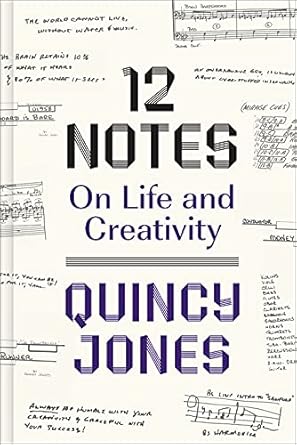
12 Notes on Life and Creativity was the clarion call to me in terms of how to operate. Author Quincy Jones has won 28 Grammy awards. He was also a humanitarian. Not in the game only for self-gain.
After reading this book and others I’ve thought long and hard about how to continue in the blogs and what to write about. My goal is twice a month on the same day in each blog to write a communique I call Left of the Dialogue. To share information about what’s going on in terms of new laws that will impact Americans.
I’m thinking about disclosure all over again. The quote is: “You can’t be what you can’t see.” This is why I’ve told my story.
I think whether a person discloses and when they do so comes down to this other maxim: “There’s a time and place for everything.”
Historically no treatment providers have offered persons with mental illnesses advice on how to stand up for ourselves and not get taken advantage of.
Individuals diagnosed with a mental health condition ordinarily do not commit crimes. We are at a 23 percent greater risk of being victims of crimes.
More so because some of us often live in dangerous neighborhoods.
The fact that people living with mental illnesses become victims of crime is why I say: not so fast in disclosing your mental health on the job to coworkers.
I realize that a lot of people with this kind of history would like to tell their coworkers and others. If you ask me it would be OK to do so only if you could respond confidently and with a steel backbone should a coworker you tell try to use the information against you to ruin your reputation or interfere with your job performance.
My friend Robin who told a coworker he had schizophrenia in turn had that coworker tell their supervisor. It cost Robin a promotion he was in line for and then didn’t get.
The fact is too that some of us (I and others I know) choose not to talk about illness and symptoms unless it’s with each other.
When I give speaking engagements I begin for only 5 minutes by talking about what happened to me. Beyond that I focus on real-life strategies for coping with living in recovery today. Positive insights that anyone who struggles can use despite their type of mental illness and its severity.
After doing this over 20 years I know that peers want practical advice not feel-good platitudes or fluff like “If you believe it you can be it!”
In the coming blog entry I will talk more in detail about disclosure in light of a book I read last week.
This radical idea struck: To write in here about the competitive advantage you have in not conforming.
Albert Einstein was a genius. Was he hanging out at the water cooler all day chatting with colleagues? Likely not.
Danny Rojas the Container Store’s Sr. Manager of Talent Acquisition spoke on this theme in an interview on the Container Store website:
Re: the fallacy of blending into the company culture and the benefit of a DEI ethic:
Rojas thinks that your being different–your individuality–can improve the culture of the company you work at.
How can you and I best add to the dynamic: By remembering that “not conforming” is not a free pass to acting convfrontational with coworkers.
I have a definite idea about the old chestnut of “acting true to yourself.” I believe everyone living on earth in this lifetime is here to experience karma. It’s not the punishment for prior sins. It’s the gaining knowledge of what you didn’t know before–like the evolution of your soul animated in this body and mind.
As not everyone we interact with is pleasant or dandy I think accepting others as they are and letting them be themselves is the key to inhabiting planet Earth with less friction and animosity among those of us with opposing ideologies.
Expecting a person to show up as their authentic self is key. This should be the playbook for interacting with people whose worldview is different from ours:
I accept and affirm how others feel. I make them feel seen and heard. I uphold that they are safe to express what they think and feel in my presence. I honor and celebrate their individuality.
Right. Not everyone else is going to operate this way–and not often likely toward a person living with a disability. Yet this is the ethic I think we should strive for.
At work you’ll rub elbows with the world. Though I failed big time working in the corporate and law offices I credit that early first experience with exposing me to coworkers from different walks of life.
Acceptance should be reciprocal: I allow you to act true to yourself and you allow me to act true to myself.
What about when a person has a mental health issue and they’re employed? Coming up my extended take on disclosure.
Last week I read on the internet about an alarming trend:
Office workers engage in “brain doping” by taking ADHD pills like Adderall to enhance their performance. The drugs enable these staff members to achieve superhuman output on the job.
Just. Why. Not ever have I been a fan of getting a job in a corporate office. Unless you are like my friend Robin. He obtained an MBA and had a 20-year career in business.
A corporate career might suit you and other followers. I wouldn’t entirely rule out working in an office. Provided management treats employees right.
The fact that people are brain doping on the job shows how insidiously harmful late-stage capitalism is when businesses put profits before people. Then workers put earning money as their reason for working and brain doping. Getting ahead in corporate America should not come at the expense of our sanity.
About two or three years ago a former Amazon office employee published an expose of her time working at that company. The book was titled Exit Interview.
Amazon expects office workers to come in on Saturdays when their managers call them on the phone that morning.
This is unlivable. This is unworkable. The Exit Interview author wrote that after working at Amazon for 12 years she couldn’t recognize herself in the mirror.
In the coming blog entry I’m going to write in more detail about the insanity of businesses–and even non-profits–demanding total allegiance at the expense of our mental and physical health.
This is the last entry in the 3-part blog carnival.
Jose Andres and his World Central Kitchen volunteers show up after hurricanes like Maria in Puerto Rico and in conflict zones Feeding the Hungry.
Andres and his crew have done what the Red Cross and U.S. government could not. In the Middle East they built a solid usable jetty. The U.S. spent $300 million building a temporary floating structure nearby that collapsed.
Andres didn’t think he could feed the millions who needed food. His game plan should be replicated by us: Start with one subgoal at a time.
Andres knew that the people living in those other countries were the best experts to tell him what to do when the World Central Kitchen staff showed up.
In fact, Andres is against hosting Zoom meetings to figure out the plan. Meet a person in person is his belief.
Change the Recipe is only 175 pages. It should be bought to refer to time and again for a refresher in hope that a single individual can alleviate the suffering in the world. Each of us can start volunteering in our corner of the world for the cause we’re committed to.
Asking the recipients of help what they need is far better than thinking you know what they need and pre-assembling a care package to give them.
Even before I published Working Assets the career guide I had at least three peers read the manuscript to tell me what they thought of it.
Living life without taking risks is no life to live if you ask me. Andres saw the need that creating World Central Kitchen could fill better than others could fill that need.
This is the key to succeeding: Filling a need your target market has and being the best at what you do.




Recent Comments