
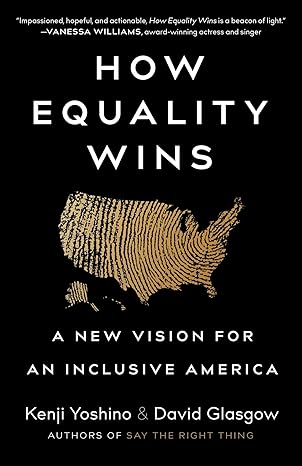
I checked this book out of the library 5 months ago. After reading five DEI books one after another circa 2022 I think How Equality Wins is the best DEI book of its kind.
Like I referred to in this blog a long time ago there’s nothing about DEI that is harsh. DEI should simply be equal treatment at work and wherever individuals interact with each other.
Today a Supreme Court ruling has restricted affirmative action in a 2023 case it reviewed.
As the authors of the book illuminate the irony is that when companies like Target end their DEI program’s to appease a president’s order the opposite effect happens: Canceling out DEI doesn’t keep them safe from governmental and anti-DEI lawsuits. Ending DEI results in lawsuits against those companies by BIPOC employees who have been discriminated against.
In fact, no white men have started lawsuits against companies claiming that affirmative action measures have discriminated against the white men. Which was the premise of the anti-DEI elected leaders–that lifting BIPOC staff members harms white male workers.
So really it’s kicking companies like Target where it hurts.
Going from “lifting” to “leveling” the authors advise as follows:
- Anonymize assements.
- Adopt structured decision-making.
- Audit systems for bias.
- Create formal mentorship programs.
As well:
“Remove degree requirements from job posting when a college degree isn’t really necessary.
Recruit from a wider range of colleges when a job requires a college degree. List job posting in a variety of formats to reach different audiences ( in other languages too).
Create training programs, ERGs, mentor and internship programs for “first-generation” professionals to give aid in their social mobility.”
What part of Equality Wins for Everyone is not understood when adopting DEI measures?
Not just BIPOC individuals benefit from DEI. Everyone wins when equality is the norm as there’s happier and healthier relationships all around everywhere.
In a coming blog entry I’ll talk about my experience in graduate school taking legal and management courses circa 1999.
In fact historically since the 1990s the Supreme Court has not been on the side of individuals with disabilities and other underrepresented groups in employment.


Recent Comments