Creative Mental Health Boosts

I’m happy to introduce this month’s Guest Blogger Jackie Cortez.

They are writing about techniques that are in the vanguard. Read on to get empowered.

Creative Ways to Boost Your Mental Health

No two people are exactly the same, so it’s no wonder that all people experience the world and even mental health challenges differently. With more people than ever reporting signs and symptoms of depression and anxiety, now is a great time to consider ways you can give your own mental health a boost in a way that’s unique to you. For a closer look at outside-the-box ways you might be able to raise your spirits and even help others, read on.

Brainstorming Ideas

As the world changes and advocates work hard to tear down the stigma around mental health, many would argue that the world is currently in a mental health crisis. People from all over the globe are taking a closer look at their habits, lifestyles, and routines in search of answers to ways to find balance and improve mental well-being. If you’re like many people, you’ve probably given some thought to ways you can help yourself feel more hopeful in uncertain times.

Try making a list of things, people, places, and causes you’re passionate about. Write down three words that describe the person you want to become and consider activities or changes that might help you get there. To get you started, here are 10 ways you could begin to take steps to improve your mental well-being in combination with professional help when applicable:

  1. Visit a place you’ve never been and keep a journal.
  2. Take a class where you can explore a new interest.
  3. Join an online mental wellness support group.
  4. Volunteer to support a cause you’re passionate about.
  5. Start a social media blog, vlog, or other platform to promote something that’s important to you.
  6. Start a new business.
  7. Change careers.
  8. Renovate your space in a way that better reflects you.
  9. Make changes in your relationships and begin to set better boundaries; keep positive people in your life and eliminate toxic ones.
  10. Engage in one random act of kindness for a stranger per week.

Teaming Up for Mental Wellness

No matter how many great ideas you have, it can be more fun to work in a united group. One of the best ways to improve your mental health is to make it a team effort. One way to do this could be to help others by starting your own nonprofit to meet a community need. It’s easier than you might think to apply for grants and public funding to form a nonprofit corporation. While you’ll need to create bylaws with details on how you’ll operate and govern this organization, the energy you put into making a difference in the world will likely help you, too.

Be Kind to Yourself

No matter how you decide to go about taking care of yourself, it’s important to go easy on yourself. Don’t hesitate to reach out to a friend or licensed professional on bad days. 

You Matter

At the end of the day, your mental health matters. Finding creative ways to honor your spirit and journey while helping the community is a great way to give yourself hope. Check out Christina Bruni’s website for more ideas on ways to improve your daily life and overall wellness.

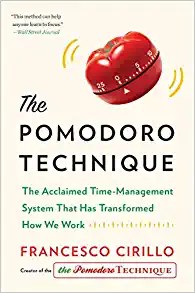
The Pomodoro Technique

The Pomodoro Technique is a time management system I instantly fell in love with. Its creator Francesco Cirillo is an Italian from Italy.

Pomodoro is Italian for tomato. The Pomodoro Technique sounds so much better than The Tomato Technique.

The author was a student studying for an exam in 1987 when he first used a kitchen timer like the tomato design one on the book cover.

You time-box the tasks you have to complete each day into multiple “Pomodoros.”

Set the kitchen timer for 25 minutes to allot for one task. At the sound of the timer going off at 25 minutes take a five-minute break.

Schedule each Pomodoro in 25-minute intervals.

This is a genius time management system. Up soon I plan to buy a kitchen timer for this purpose.

The timer will tick while you’re working and that’s okay if you are the only one in the room. Or if you work in an office where you can close the door.

In the book Cirillo gives tactics for using team Pomodoros.

25-minute intervals are the perfect length of the Pomodoros.

There’s no reason to warm a chair 10 hours a day at your desk at work. The trick is that you should be productive within a normal seven-hour workday.

The Pomodoro Technique is perfetto as Italians would say.

It’s the perfect solution to getting things done with more focus power and energy.

Dream first Details Later

Ellen Bennett wrote Dream First Details Later:

Her memoir and how-to-succeed in business guide.

The founder and owner of Hedley and Bennett she sells cook’s aprons (for chefs and at-home cooks).

The higher quality aprons cost $85 to $125.

A chef at Providence in Los Angeles she was frustrated with the ill-fitting poor-quality aprons the restaurant owner was going to buy.

“I have an apron company. I’ll sell you better aprons,” Bennett told him.

That was the right-then start of her own apron business.

She chronicles the evolution of Hedley and Bennett from first thought to ultimate sucess.

The trick is that most start-up businesses fail because the products being sold no one wants to buy. To become a Next Millionaire Next Door, you should be able to see a need in the market and capitalize on filling the need.

Today according to Sam Conniff Allende in Be More Pirate creating a business plan is Out. Drafting a Pirate’s Code is In.

A one-page business plan is all you might need. See the book The One Page Proposal by Patrick G. Riley for details. I’ve used this book to create a one-page sales pitch.

See the lovely Hedley and Bennett aprons for sale.

Coming up a review of another great book. It didn’t get listed in the book directory in the forthcoming print copy of Working Assets. Owing to the fact that the career book was already in production.

Click on the Career Resources header at the top of this blog for an updated list of books that are in the forefront.

Be More Pirate

The book below was a game-changer for me:

It’s shelved in the business section at the library. I recommend buying a copy and marking it up. Though I have a photographic memory so remembered the key integral points the author talked about.

Be More Pirate is the guide for taking on the world and winning. There’s no other book like it.

At the end of the book, I created my own Pirate’s Code using three of the author’s articles first and four of my own at the end. Each article contains one or two sentences that reinforce the ethic of that article.

My Pirate’s Code has these 7 Articles:

  1. Take Happiness Seriously.
  2. Embrace Diversity to Raise Your Game.
  3. Make the Citizen Shift.
  4. Celebrate Individuality.
  5. Commit to Truth-Telling.
  6. Use Storytelling to Create Empathy.
  7. Break Bread Together.

Toward the end of Be More Pirate the author told the story of a Black musician circa 1982 who started to have dinner with Klansmen. The three men gave the musician their white robes. Interacting with the Black man they realized the folly of their hate and no longer wanted to be a part of the Klan.

Whether predictably or not the NAACP castigated the Black musician for breaking bread with the enemy.

The fact is not all of us will have 1Million Instagram followers willing to do our bidding and buy the products we’re selling or the propaganda we’re peddling.

One person who is able to change the lives of only 1,000 individuals or 100 or even only 10 is making a veritable difference in the scheme of things.

I will end here with the 5 rules of How to Be More Pirate to encourage you to buy the book:

Pirates draw strength from standing up to the status quo.

Pirates bend, break, and ultimately rewrite the rules.

Pirates collaborate to achieve scale rather than growth.

Pirates fight for fairness and make enemies of exploitation.

Pirates weaponize stories then tell the hell out of them.

The Future is Today

In coming blog entries I’m going to review two cutting-edge how-to-get-ahead-in-business books.

It’s a fool’s errand to fake being someone you’re not to try to get ahead in life. You won’t get ahead unless you act true to yourself. I dream a day when a person doesn’t have to “code-switch” or whatever the term is for acting palatable to be taken seriously.

Any business that does not value diversity of thought, background, experience, and understanding is going to be left in the dust as the century rolls on.

With a Visionary archetype I see the direction society should be going in. And I’ll go in that direction before anyone else does to create the opportunities I want to see for myself and others.

The future is today. To live in the world that we want to see each of us must act collaboratively to create this world.

Already–though my career book Working Assets is set to be published this summer–I have the idea for a second radical career book geared to individuals with mental illnesses.

No business that wants to thrive make money and stay in business can afford to shut out of employment the very people who can ignite profits with our revolutionary thinking about how to design, create, market, and sell a product or service.

In fact, as job seekers we’re marketing ourselves as the ideal worker to come on board. Researching the companies that value diversity, equity, and inclusion should yield clues as to where to pitch ourselves.

In a future blog entry, I will write about the benefits of inclusion specifically. I have ideas for strategies that I will talk about.

In the coming blog entry, I will review the business book Be More Pirate, or How to Take on the World and Win.

The pirate way deserves a careful read in this environment.

The One Day One Job Approach

Five months ago, I read The Pretty One by Keah Brown. Her first-person account of living with cerebral palsy. How because she couldn’t walk fast crossing the street drivers in cars honked their horns at her.

One part of the memoir stood out to me. Kean Brown exposed the insanity of how able-bodied people rush-rush-rush places every day filling their lives with nonstop activities.

This week I decided to conserve my energy for doing only the things essential to maintaining my well-being.

This daily living habit I term the “one day one job” approach.

Even when I’m not at my job I consider the tasks I need to do “jobs.”

My one job might be posting this blog entry. Or doing the workout routine.

I’ve learned this life lesson about not taking on herculean tasks that derail my focus and energy.

It’s precisely because living with a disability gives us challenges that we are uniquely qualified to “opt out” of the busywork insanity.

Without feeling shame or regret for not living up to these impossible demands that the majority of Americans make on themselves.

I say let people who have a vested interest in living under the cover of what’s “normal” burn themselves out running around without stopping every day.

Easily 12 years ago I read a book by Leo Babauta. In it he talked about limiting the focus of your life to your “5 Commitments.”

My 5 passions are art music fashion books and exercise.

One other tactic I adopted is to KISS–Keep It Simple Sweetheart.

In 2003 I wrote in an online article: “If it doesn’t fit, I won’t commit.”

We have all the time we need to get done everything we need to do.

Taking the time to do what’s integral to our health and happiness. Discarding the things that numb us or distract us or divert our attention from our 5 commitments.

This is something to think about:

Daring to let go of the busywork.

Risking “missing out” when attending those events would not add benefit to our life.

Taking joy in being present and centered on the things we choose to do.

Fighting for Recovery at Work – Part 2

Guest blogger Ashley Smith continues her series on 5 Steps to Fighting for Recovery at Work:

Third, ask for accommodations at work. When my symptoms were bad, I reduced workhours. While this option is controversial because we may not want to disclose the fact that were having health issues, seeking accommodations should be considered. Accommodations may look like reducing hours, workload, taking more breaks, and sick leave.  How can somebody work when they cannot function?! Also, some companies offer mental health or self-care days, employment assistance programs, and benefits that is family and medical leave. 

Steps 4 and 5 to follow in second blog entry.

The fourth step is vital to the recovery journey. That is your support system. When going through it at work it is important to stay connected to others. Loved ones may ask: are you okay? You looked stressed out? Do you need to take a break?  Therefore, let your friends and family know that you need more support. Lean on more than two people that way you’re not putting too much on one individual. Stay in the loop with people by text and other electronic channels. Send a selfie picture for them to see your hair, eyes, and facial expression—these may seem like subtle cues, but your loved ones know when you’re off balance by your presentation, which other people might overlook.

Also, your punctation in text messages may seem different. Do a video call or just talk on the phone. Your tone of voice could let your closest supporters know you are going through something. When you visit them in-person carry out activities that you both enjoy. For example, cooking, playing cards, walking, watching your favorite shows or movies, etc. Other ways to get involved may include getting involved in a support group, going to the park, and coffee shop, etc. Staying connected is very important. It is critical to the recovery journey because we all need support to thrive in life.

Finally, acknowledge the need to change your routine. In the past, I recognized how my self-care routine was not a priority and this effected my overall wellness. Therefore, I practiced the tips I outlined above: 1) look at your early warning signs, 2) discuss concerns with your health team, 3) seek accommodations at work, 4) gather supporters for assistance, and 5) develop a new routine. Being intentional about self-care needs, support, and treatment are essential to fighting for wellness at work.

Again, I encourage you to look at therapy to strengthen coping strategies. I’ve created many coping tools with my therapist over the years and even though I may become challenged at work or in other areas, I recycle wellness activities. In fact, my top self-care priorities right now are prayer, therapy, journaling, walking, checking in with a family and friends, and resting. Everybody’s focus may be different, but the struggle is real, and symptoms are too. Still, stay hopeful and connected with your network. If necessary, ask for accommodations. Continue to believe you will overcome situations with mental health and get back to work in a good place.

______________________________________

To learn more about Ashley Smith visit her blog, Overcoming Schizophrenia and purchase her lasted blog book, What’s on My Mind? Volume I, Revised Edition. The blog examines her life in recovery. Ashley discusses symptoms and alternative coping strategies. She empowers others with hope. Her blog book, What’s on My Mind? Volume I, Revised Edition, is a collection of blog articles from Overcoming Schizophrenia (2008—2013), that explores how she learned of her diagnosis, became a mental health advocate, and manages recovery. Ashley Smith is a former state NAMI Georgia board member, state trainer, and group facilitator. She serves on the advisory council of the CURSZ Foundation. Ashley works as a peer counselor known as a certified peer specialist (CPS) in Georgia. Read more about Ashley Smith:

Blog: http://overcomingschizophrenia.blogspot.com/ Books: www.amazon.com/author/smithashley

5 Steps to Fighting for Recovery at Work

Today I’m featuring a two-part series of blog entries that guest blogger Ashley Smith is taking over to post. She has been blogging on her own for over 10 years. Here Ashley writes about how to fight for recovery at work. Steps 1 and 2 start off the series.

___________________________________

5 Steps to Fighting for Recovery at Work:

Fake it till you make it. That’s how others tried to motivate us to get the job. This mindset motivates us in the short-term, however, it doesn’t meet the demands living with mental illness. Symptoms vary, but no matter the struggle they are all severe because it effects the ability to function in the workplace.

I understand the challenges all too well. Despite living with schizoaffective disorder, bipolar type, which is schizophrenia and bipolar disorder combined, I aim to manage employment. Yet, working continues to present problems because the illness affects my thought process and behavior. Some of the symptoms I experienced over the years included suspiciousness, anxiety, bizarre beliefs, catatonia, seeing and hearing things that others don’t, high energy, and depression. I take medication, but pills can’t control all the complexities of a brain condition. Still, I fight for wellness and tackle symptoms with support.

What do you do when symptoms make your job difficult to manage? Here are five steps to pressing forward in your recovery: 1) Identify the early warning signs, 2) talk to your treatment team, 3) discuss accommodations with your employer, 4) rally your support system, and 5) create a new routine.

First, common early warning signs of mental health may look like poor sleeping patterns, a change in appetite, challenges with maintaining house chores, and a shift in moods that effects relationships and performance at work. Whenever I’m not sleeping and eating well, I suffer through the workday. How can someone work long hours, concentrate on tasks, and complete their job duties effectively when they don’t feel well? Generally, I keep my home presentable. However, a cluttered house can translate into a cluttered mind. Eventually, poor management of self-care, house chores, and eventually work performance. Prior to symptoms at work, you may have exhibited some of the early warning signs of imbalance. Seek professional support.

Second, discuss changes in meeting daily self-care needs, work deadlines, and other challenges with your treatment team. I’ve had to adjust the dosage of my medication. And later recognize that I wasn’t taking my medications as prescribed. Once, I took a medicine that is best taken at night with other prescriptions in the morning that effected my energy level at work. Other times changing dosages and medication didn’t resolve issues. In addition to that, I increased therapy sessions to process daily stressors. I encourage everybody to consider therapy because it is a great asset to recovery.

Steps 3, 4, and 5 coming up.

Managing Your Mental Health on the Job

Today I did not go to my job. Shook up I was because of the subway shooting in Brooklyn on the N train. I have lived in Brooklyn for 23 years. Luckily, I was not on that train in the morning.

As it is I only ride the subway when I’m forced to and have no other option. My goal when I retire is to take cabs everywhere. If you’re a tourist and can afford to visit New York City I recommend you save money to take taxis around this town.

How does this factor into managing your mental health on the job? After arriving home last night I decided to stay home today.

As I’m typing this my cell phone beeped with an alert asking for information about the suspect. This indicates that the law enforcement individuals involved have pinpointed who they think it was that opened fire inside the second car of the N train. The shooter is no longer only “a person of interest.”

Why have I become agitated over this shooting? Most likely because of the level of cold calculated attention-to-detail that the alleged shooter used to carry out the crime.

Calling up your supervisor and telling them you can’t come to work isn’t something I take lightly. What is the right way to take time off?

First: I would not broadcast to and tell your coworkers a week before that you’re calling in sick on the following Thursday. Keep this to yourself.

Maybe what flipped this switch in my head was that coworkers have no qualms about taking what’s called a “mental health day” and calling in sick to do so.

This is the root of why I stayed home today. Before I hadn’t taken a mental health day ever. After getting shook up over yesterday’s shooting I decided it was time to take a mental health day when I needed to.

My experience having a union job is that I accrue one sick day every month. Right now, I have 50 sick days stored up in my time bank.

Since a lot of us don’t have a union job (and even for those of us who do) I advocate for becoming a worker’s right Activist. You can like I do petition for paid time off.

I’m trying to get management to give all staff who have worked here for 15 years a one-month paid sabbatical. So that we can use the time for whatever we want to do.

I’m also urging that all staff be given 4 extra time-off days per year coded as “mental health days” in addition to our regular sick time.

Plus: give us hardship pay as essential workers who showed up to our jobs throughout the pandemic.

In a future blog entry here, I would like to have a peer friend be a guest blogger. My goal is to have her talk about ways to manage symptoms you might have while at work.

Sadly, in most corporate and other office jobs you aren’t given a lot of paid sick days you can take off. Fast-food and other minimum wage earners get no paid sick time at all. Forcing them to show up in ill health to their job. Just so they can get paid.

In the 1990s I talked with the boss of a company. Thinking I might go work there.

On the telephone he told me: “It’s okay to call in sick once. If you call in sick two or three times that’s not okay.”

Huh? We are human beings. We are not machines. Our bodies are not robots. We’re not Roombas designed to figure out where to go to clean a floor. And some of us haven’t cleaned our floors in years.

Expecting that employees show up to work when we’re sick is the way to spread illness to other coworkers. It’s the guaranteed way to risk making ourselves chronically ill as well.

Joe Manchin (a Democrat) and others (Republicans like Nicole Malliotakis who I call Nicole CacaCola) are against giving American workers paid sick leave.

Manchin used the “Welfare Queen” trope to claim people who took time off would be going on a Carnival Cruise. It was reported that most of his constituents live in poverty.

What? I’m sitting at my desk typing this. After I’m done here, I will be going in bed and resting until noon. Then I’ll have breakfast. I won’t be going outside. I won’t be having fun.

My stance is that we should listen to our bodies. If our body is telling us to rest, we should rest. If our body has energy, that’s when we should take on the world.

5 Remedies for Burnout

Burnout can happen on the best of jobs. Better economic compensation goes only so far to help us. According to the authors of Happy Money.

In this blog entry I’ll talk about the measures I took to alleviate burnout. In the coming blog entries, I will talk about managing your mental health on the job.

#1 – Adopting an anti-consumerism ethic.

People who engage in consumerism are less happy and have more financial stress. Often a person is miserable chained to a desk because they’re funding a lifestyle buying material things.

#2 – Focusing on experiences.

The kinds of experiences we have make people happy. These can be free or low-cost activities.

The Brooklyn Museum where I live in New York City has a reduced admission fee for individuals with disabilities.

I attended the Christian Dior and Any Warhol exhibits for $16 each. Nine dollars cheaper than the regular $25 fee.

#3 – Fulfilling what gives your life meaning.

What instantly perked me up was uploading the Working Assets career guide manuscript to the publisher. My goal is to have the book go on sale in July. With a pre-order date of May 9.

#4 – Funding your retirement.

To quote Nietzsche: “He who has a why can bear any how.”

This nailed the ultimate ability I had to accept that my day job had become a daily grind.

If you’re not constantly buying things, you ideally would be funding a retirement account or two. The quicker you can retire the easier it could be to work at a job that you no longer like.

#5 – Listening to music.

A study revealed the benefits of listening to music.

What I did to overcome the “one day like any other” feeling didn’t require a lot of money. It didn’t require one dime. The activity was free. Who doesn’t like free?

See the link at the bottom of this blog entry to Audacy.com.

On Audacy I listen to music channels. My favorite is Scott Lowe on the Go’s Post-Modern Music Box. Followed by New Arrivals.

It gets me going to listen to the cheerful alternative music. The Music Box features 1980s and 1990s popular alternative songs. New Arrivals features today’s alternative music.

In my apartment the sound is often going from nine in the morning to nine at night. You might be lucky to be able to listen to music at your job. That’s even better.

Listen to Audacy here.